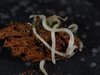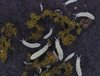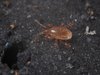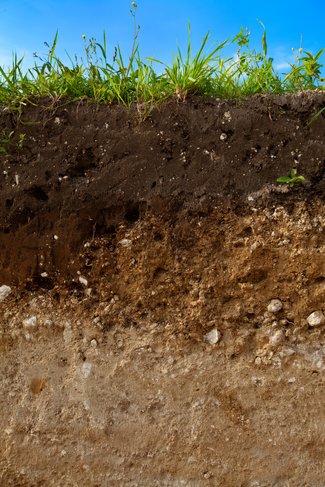
Soil animals are incredibly important to the soil ecosystem, as they help decompose dead plant material, thus releasing nutrients to plants. Several species of soil animals can be found (e.g., earthworms, collembolans, roundworms). Earthworms clearly constitute the largest animal biomass in soil. In organic grass fields, up to 1,000 earthworms can be found per m2, with a biomass of several hundred grams. Collembolans are found on all continents and virtually all habitats – from deserts to the Arctic tundra. Particularly in the Arctic, collembolans appear in massive numbers with up to 100,000 per m2. Among other things, soil animals are characterised by their highly water-permeable skin, which means they quickly dehydrate when removed from their safe, humid surroundings in the soil and exposed to free air. In this way, soil water conditions are unquestionably the most important parameter for the activity and well-being of soil fauna. Although soil animals are regarded as terrestrial animals, they are physiologically more similar to freshwater animals than you might think. The Russian scientist Ghilarov already recognised this in 1949, when he suggested that, for many invertebrates, soil has served as an evolutionary intermediary in the transition from aquatic species to “true” terrestrial invertebrates.