
Agroforestry for People, Ecosystems and Climate
The AfPEC project examines how coffee-based agroforestry can help strengthen nature, climate and local livelihoods in Uganda.
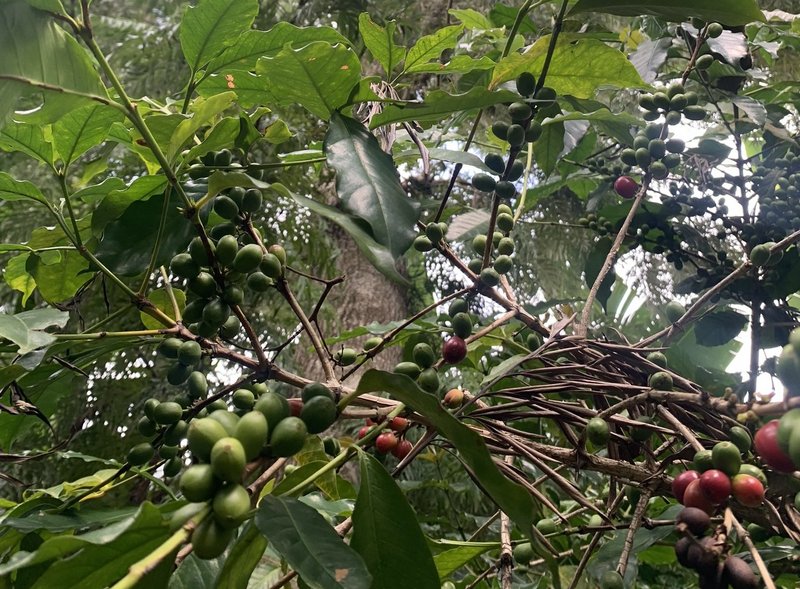
AfPEC-projektet The AfPEC project (https://afpec.info/) examines how coffee-based agroforestry can help strengthen nature, climate and local livelihoods in Uganda. The project combines scientific research with practical support for coffee farmers and is carried out in close collaboration between universities, NGOs and private companies.
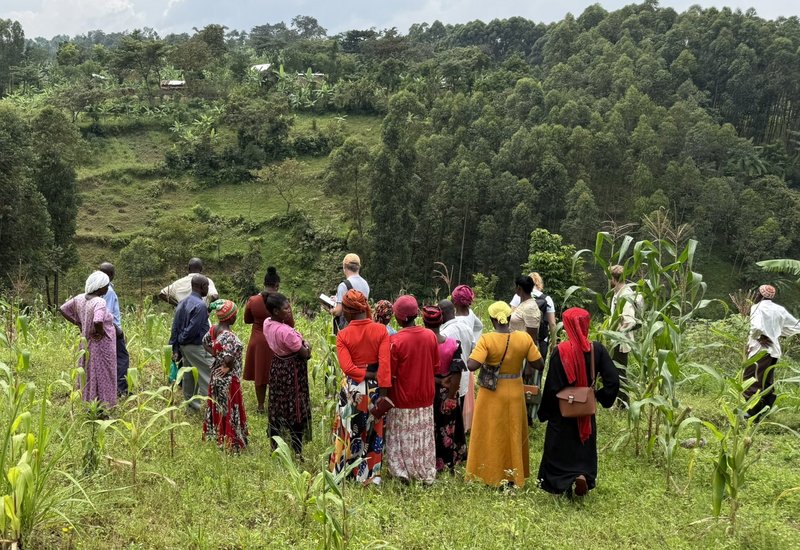
On Mount Elgon in eastern Uganda, coffee agroforestry has been the backbone of local economies since colonial times. Coffee provides essential cash income, while trees and other crops supply food, firewood and building materials. At first glance, the landscape on Mount Elgon’s lush mountain slopes may appear green and well preserved, but behind the façade, pressure on natural resources is increasing.
Uganda’s population has grown rapidly – from around 8 million at independence in 1962 to approximately 53 million today. With each generation, agricultural land is subdivided into ever smaller plots, and many native tree species have gradually disappeared, replaced by exotic fruit trees and eucalyptus. At the same time, local knowledge of the original ecosystems and their functions has been lost in many areas.

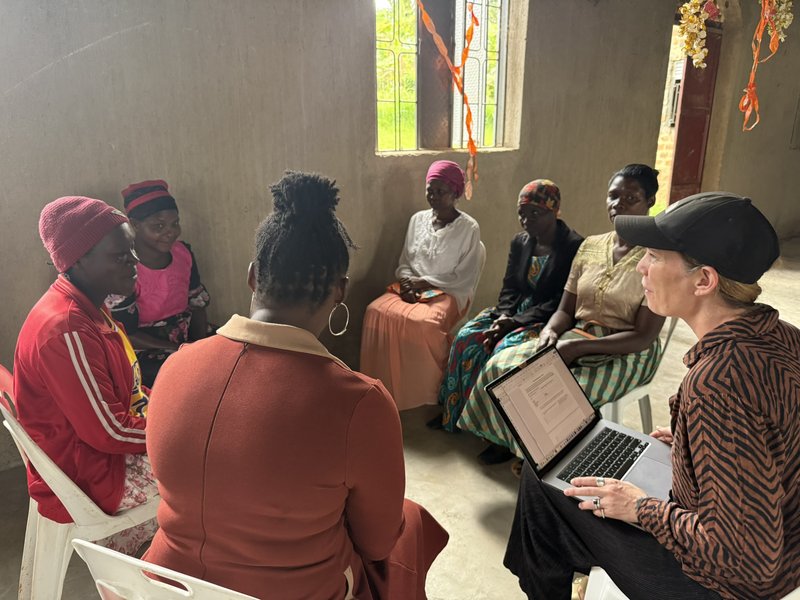
AfPEC’s research documents how the interactions between trees, crops and people can provide important ecosystem services – such as carbon storage, soil fertility and biodiversity – while also supporting local livelihoods. The project is currently working to identify the most suitable native tree species and the most effective cultivation methods for coffee agroforestry. In its first year, six Danish master’s students carried out fieldwork on the slopes of Mount Elgon, and four Ugandan PhD students are likewise affiliated with AfPEC. The shared aim is to develop solutions that benefit nature and are economically attractive and practically feasible for farmers.
To ensure that research-based knowledge is translated into concrete action, AfPEC is establishing so-called Living Labs. These serve as spaces for demonstrating good practices in real agricultural systems and for facilitating joint learning. The Danish NGO Seniorer uden Grænser plays a central role in the collaboration with coffee farmers and students. Through partnerships between researchers, students, NGOs and local actors, agroforestry systems are developed and improved in ways that can contribute to more resilient ecosystems, greater biodiversity and more sustainable livelihoods.


AfPEC also collaborates with external partners, including Frellsen Kaffe, to promote socially and environmentally sustainable coffee production and export that creates long-term value for local coffee farmers. A fair price for coffee provides both the motivation and the financial means for farmers to maintain and care for their agroforestry systems.
The AfPEC project is funded by Danida and coordinated by Anne Mette Lykke, Ecoscience, with participation from seven partners in Denmark and Uganda (https://afpec.info/partners/).